
This site participates in affiliate programmes. Buying through our links supports our editorial work at no extra cost to you.
Mattresses and Sweating: Guide to Sleeping Cool
Mattress and sweating guide 2026: cooling technologies, breathable materials, and tips to stop sweating at night.
Sweating at night is the nightmare of 30% of French people. Waking up drenched in sweat, damp sheets, chronic fatigue… The mattress is often the obvious culprit, yet rarely the first thing people change. But not all technologies retain heat the same way. A simple material change can transform restless nights into restorative sleep. Here's how to choose a mattress that keeps you cool from 11pm to 7am.
Why some mattresses retain heat
Foam: a thermal insulator
Polyurethane foam, even high-density, is a closed-cell material. Air circulates poorly, heat accumulates. It's simple physics.
Memory foam: the comfort that heats
Viscoelastic foam adapts to body heat. That's its very principle — and its flaw for hot sleepers. Without specific treatment, it creates a thermal "cocoon" effect.
Excessive thickness
A 30 cm mattress with 10 cm of dense foam traps heat. The more material there is, the slower heat dissipates.
The coolest materials
1. Natural latex: the breathability champion
Open-cell structure, natural air circulation. Latex stays 2 to 3°C cooler than memory foam.
✅ Very breathable, hypoallergenic, durable ⚠️ Higher price 💰 700–1 500 €
Naturalex Bio Premium
Naturalex
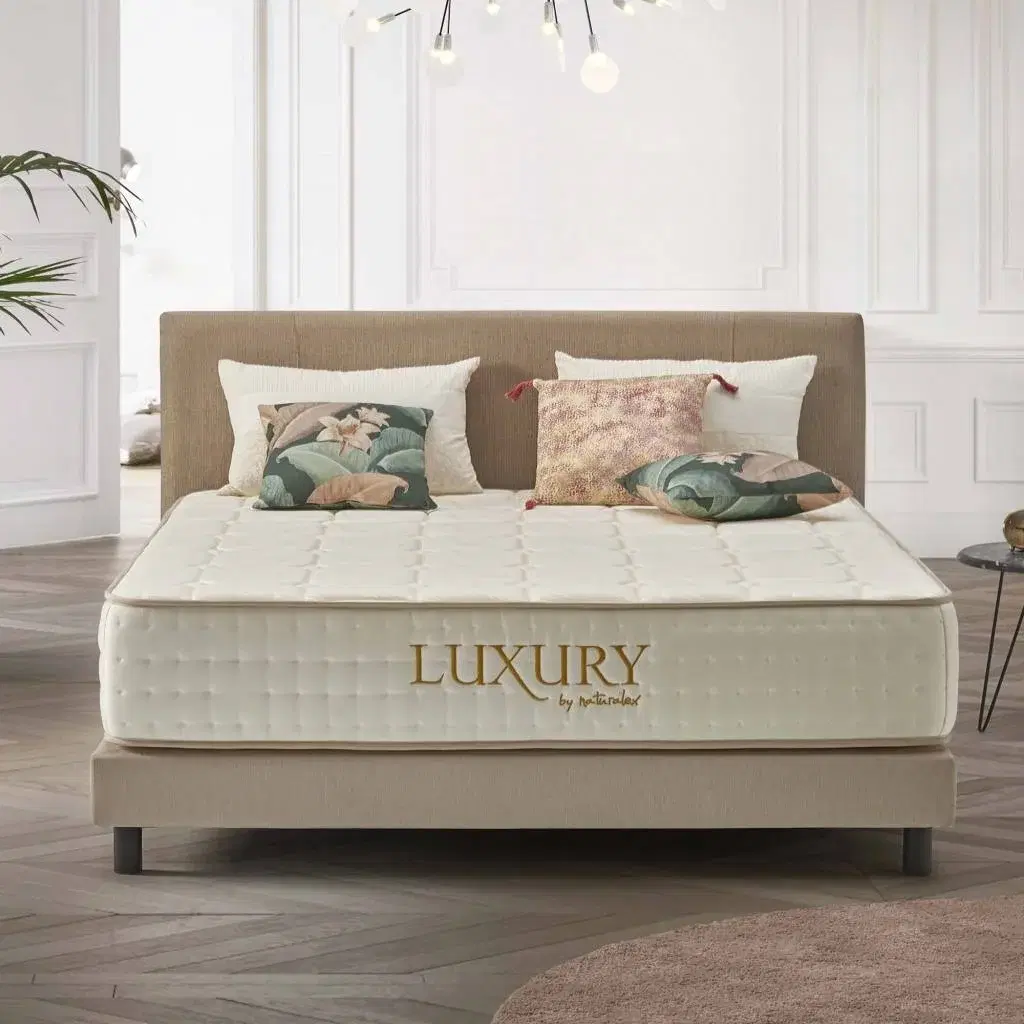
- 100% latex naturel certifié GOLS
- Certification Oeko-Tex
- Anti-acariens et anti-bactérien naturellement
- Housse Tencel lavable à 60°C
237 people chose this product this month
2. Pocket springs: ventilation by design
The space between springs lets air pass freely. It's the most ventilated technology on the market.
✅ Excellent air circulation, good support ⚠️ Less cradling than foam 💰 500–1 200 €
3. Thermoregulating gel memory foam
Gel microcapsules (phase-change material, PCM) absorb heat when it's hot and release it when it's cold.
✅ Cradling comfort + thermoregulation ⚠️ Effectiveness varies by brand 💰 600–1 000 €
4. Natural fibres (wool, cotton, linen)
Used in covers, they naturally regulate moisture.
| Material | Moisture wicking capacity | Perceived temperature |
|---|---|---|
| Linen | Excellent | Very cool |
| Organic cotton | Very good | Cool |
| Wool | Good | Moderate (warm in winter, cool in summer) |
| Polyester | Low | Warm |
| Viscose | Average | Neutral |
Comparison table: mattresses by thermal technology
| Technology | Breathability | Cradling comfort | Indicative price | Our verdict |
|---|---|---|---|---|
| Natural latex | ⭐⭐⭐⭐⭐ | ⭐⭐⭐⭐ | 700-1500€ | The coolest, long-term investment |
| Pocket springs | ⭐⭐⭐⭐⭐ | ⭐⭐⭐ | 500-1200€ | Perfect for very hot sleepers |
| Gel memory foam | ⭐⭐⭐ | ⭐⭐⭐⭐⭐ | 600-1000€ | Good comfort/coolness compromise |
| Hybrid (springs + foam) | ⭐⭐⭐⭐ | ⭐⭐⭐⭐ | 600-1100€ | Versatile, good ventilation |
| Standard PU foam | ⭐⭐ | ⭐⭐⭐ | 200-500€ | Avoid if you sweat |
| Traditional memory foam | ⭐⭐ | ⭐⭐⭐⭐⭐ | 400-800€ | Too hot for sensitive sleepers |
Accessories for sleeping cool
Cooling pillow
Gel or perforated latex pillows offer a cool surface for the head and neck — areas where sweating is particularly uncomfortable.
Linen or cotton percale sheets
Linen wicks moisture 2 times faster than standard cotton. Cotton percale (tight but fine weave) is also very breathable.
Cooling mattress topper
If you can't change your mattress, a latex or gel topper can create a cooling layer. Avoid standard memory foam toppers.
→ See our mattress topper guide and our best natural latex mattresses comparison for breathable options.
Evening routine to limit sweating
- Ventilate the bedroom 15 min before sleeping
- Temperature: maintain 16-19°C
- Last meal: 3h before bedtime (digestion generates heat)
- Warm shower: helps lower body temperature
- Bedding: linen sheets, lightweight summer duvet (150-200 g/m²)
Signs your mattress retains too much heat
If you experience several of these symptoms, your mattress is likely the culprit:
Waking up drenched several times a week: Occasional night sweats may be related to ambient temperature, but regularly waking up in sweat indicates a mattress thermoregulation problem.
Suffocating "cocoon" sensation: You feel "absorbed" by the mattress with heat building up around your body. Typical of basic memory foam without cooling treatment.
Needing to change position every hour: You constantly move to find a "cool" spot on the mattress. This is a sign that heat isn't dissipating properly.
Asymmetric sweating: If you sweat more than your partner, check that you're sleeping on the same type of mattress. Differences in weight and muscle mass can also explain this phenomenon.
Our recommendations by profile
Very hot sleeper, seeking maximum coolness
→ Dunlopillo Latex Confort — ultra-breathable natural latex, open-cell structure. It's the coolest mattress in our test panel, with a perceived temperature difference of 2-3°C compared to standard memory foam.
Hot sleeper who wants cradling comfort
→ Simba Hybrid — thermoregulating Simbatex foam + airy micro-springs. The ideal compromise for those who like the enveloping feel of foam without the thermal downside.
Couple with a partner who's always cold
→ A hybrid mattress with differentiated comfort zones or a latex topper on the "hot" side and a lightweight duvet on the "cold" side. Communication about temperature preferences is just as important as the mattress choice.
Moderate budget, thermal improvement
→ Hybrid mattress with cooling fibre cover. Check our sweating comparison for the best options. A latex topper (~100-150 EUR) can also transform a mattress that's too hot.
Menopausal person
→ Prioritise natural latex or pocket springs with a natural fibre cover. Nighttime hot flashes require rapid heat evacuation. Absolutely avoid memory foam without thermoregulating gel.
FAQ: Mattresses and Sweating
Conclusion
Sleeping cool isn't a luxury: it's a fundamental condition for sleep quality. If you sweat at night, evaluate your mattress with a critical eye. Often, the problem isn't the thermostat but the choice of materials. An investment in a breathable mattress translates into full nights of sleep, waking up refreshed, and a noticeably improved mood. Technology makes all the difference: prioritise natural latex, pocket springs, or gel memory foam. And don't forget that bedding (sheets, duvet, pillow) plays an equally important role.
→ Discover our best anti-sweating mattresses 2026 comparison and our selection of the best mattresses 2026.